100 Employees, 10,000 Sq Ft or Less? How to Plan Your Office
How Much Office Space Does 100 Employees Need?
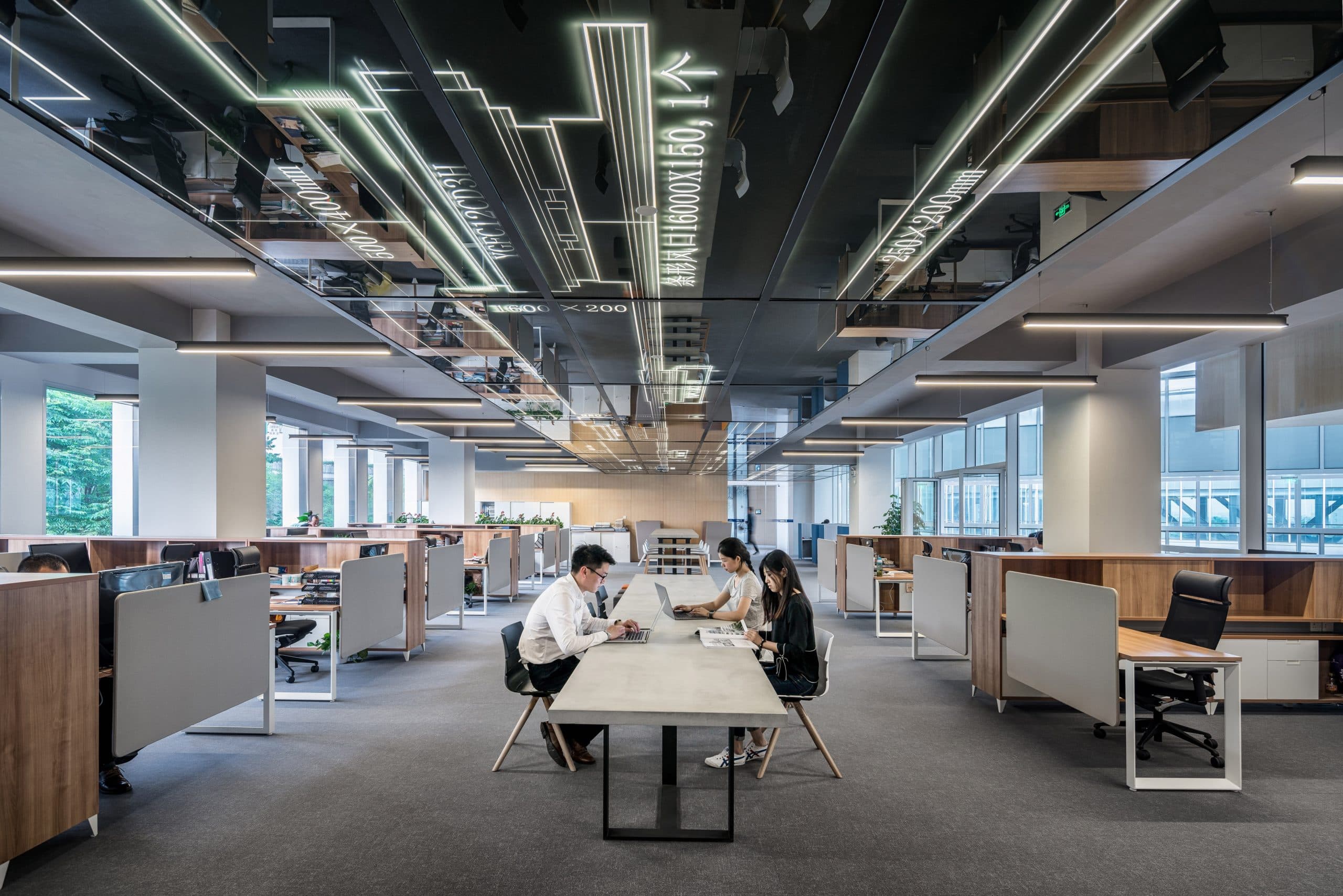
For a 100-employee company, an office between 6,000 and 10,000 sq. ft. can work well depending on the business model.
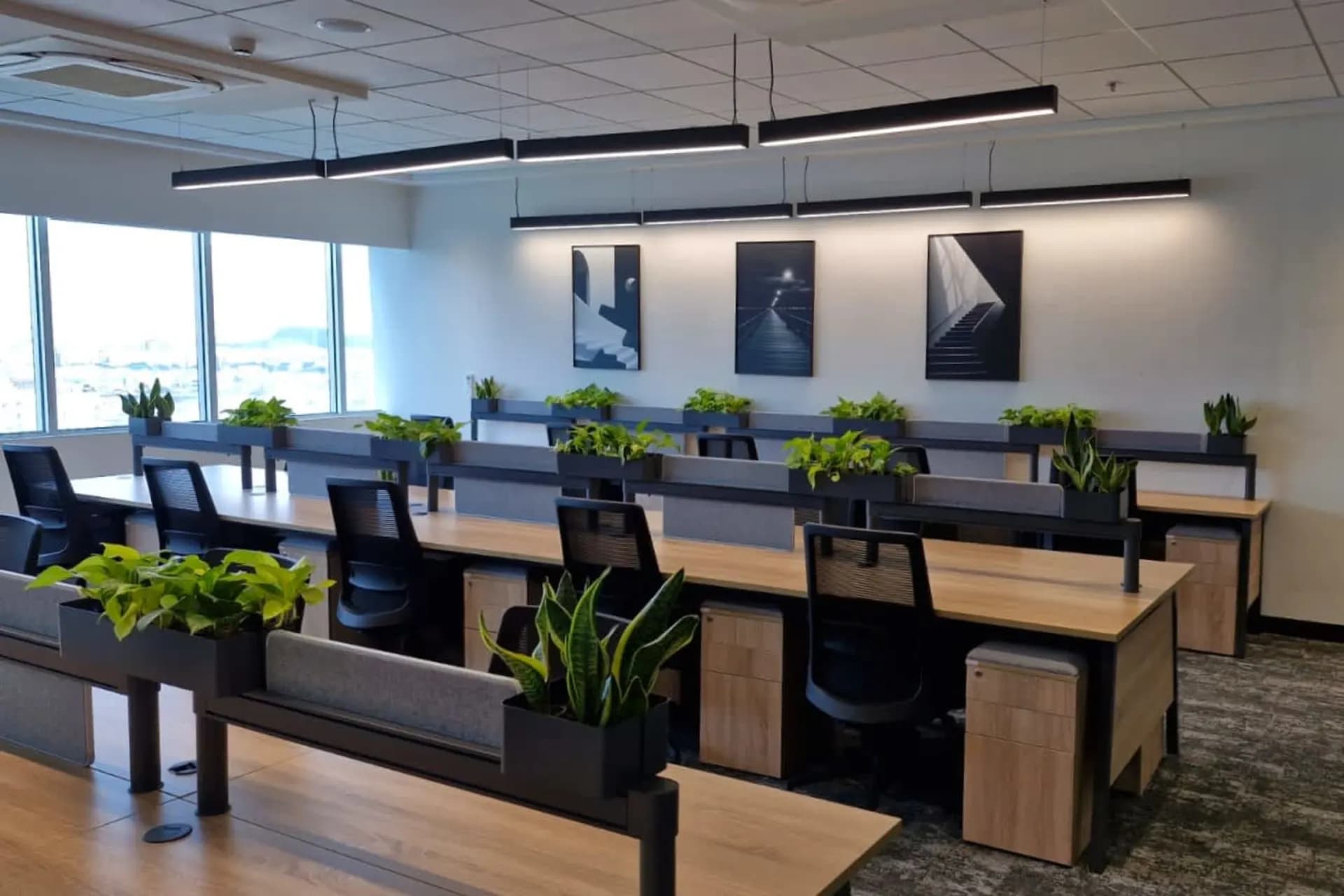
A company where everyone works from the office every day may require more dedicated workstations. A hybrid company, on the other hand, can reduce its overall requirement through shared seating.
As a general planning range:
- 6,000–7,000 sq. ft. – Compact and space-efficient setup
- 7,000–8,500 sq. ft. – Balanced office with meeting and collaboration areas
- 8,500–10,000 sq. ft. – More spacious setup with additional amenities
The objective should not be to maximize square footage. It should be to maximize usable space.
Start With Your Workstation Requirement
Before looking at properties, determine how many employees actually need dedicated desks.
If you have 100 employees but only around 70% are in the office on an average day, you may not need 100 permanent workstations.
However, companies with full-time office attendance should plan closer to their actual headcount.
Once you know the workstation requirement, you can plan the remaining space for meeting rooms, cabins, reception, pantry and collaboration areas.
Don't Plan Only for Workstations
A good office needs more than desks.
For a 100-employee workplace, you may need:
- Meeting and conference rooms
- Manager and leadership cabins
- Reception and waiting area
- Pantry and breakout space
- HR or accounts room
- Server/IT room
- Storage
- Circulation space
A common mistake is using most of the available area for workstations and then struggling to fit meeting rooms and support areas.
Good office planning balances employee seating with business functions.
Carpet Area vs Chargeable Area
When comparing commercial offices, don't look only at the headline square footage.
Understand the difference between carpet area, built-up area and chargeable area. Two properties advertised at 8,000 sq. ft. may offer very different usable spaces.
For businesses evaluating [commercial office space in Pune], comparing properties based on actual usability can help avoid paying for space that doesn't contribute to your workplace requirements.
Plan for Growth
Your current employee count should not be the only consideration.
If your company has 100 employees today but expects to reach 130 or 150 employees over the next two years, a tightly planned office may become insufficient quickly.
Before signing a lease, check whether the building provides:
- Expansion opportunities
- Adjacent office space
- Flexible lease options
- Sufficient parking
- Infrastructure for additional employees
A slightly larger but expandable office can sometimes be more practical than moving again after a year.
Location Matters Too
The right office isn't only about square feet.
Employee commute, public transport, parking, nearby food options and accessibility can directly affect the attractiveness of an office location.
In Pune, businesses commonly evaluate commercial locations such as Baner, Balewadi, Aundh, Kharadi, Viman Nagar, Hinjewadi and Shivaji Nagar based on their workforce and business needs.
Businesses considering expansion in Madhya Pradesh can also explore [office space in Indore] and compare established and emerging commercial locations.
Managed or Conventional Office?
For a 100-person team, it is also worth comparing conventional offices with managed office space.
A conventional office gives businesses more control over design and customization, while a managed office can reduce the time and effort required for interiors, furniture and day-to-day workplace setup.
The better choice depends on your budget, move-in timeline, customization requirements and expected tenure.
Don't Compare Offices Only on Rent
A cheaper office is not always the cheaper workplace.
When evaluating a property, consider the complete occupancy cost, including:
- Rent
- CAM and maintenance
- Interior and fit-out
- Furniture
- Utilities
- Internet and IT infrastructure
- Parking
- Housekeeping and security
The right office should provide a balance between cost, usability, employee experience and future growth.
Final Takeaway
For 100 employees, 10,000 sq. ft. is not a fixed requirement. A well-planned business may operate comfortably in 6,000–8,000 sq. ft., while another company may genuinely need closer to 10,000 sq. ft.
The right answer depends on how your employees work, how much collaboration space you need and where your business is heading.
If you're looking for commercial office options, [WhichFloor.in] can help you explore spaces based on employee strength, office size, location and workplace requirements.
Plan the workplace first. Then choose the square footage.
Frequently Asked Questions
Common queries related to commercial real estate & office leasing.