Flexible Office Space vs Long-Term Lease: What's Right for a Growing Startup in Pune

What Counts as Flexible Office Space?
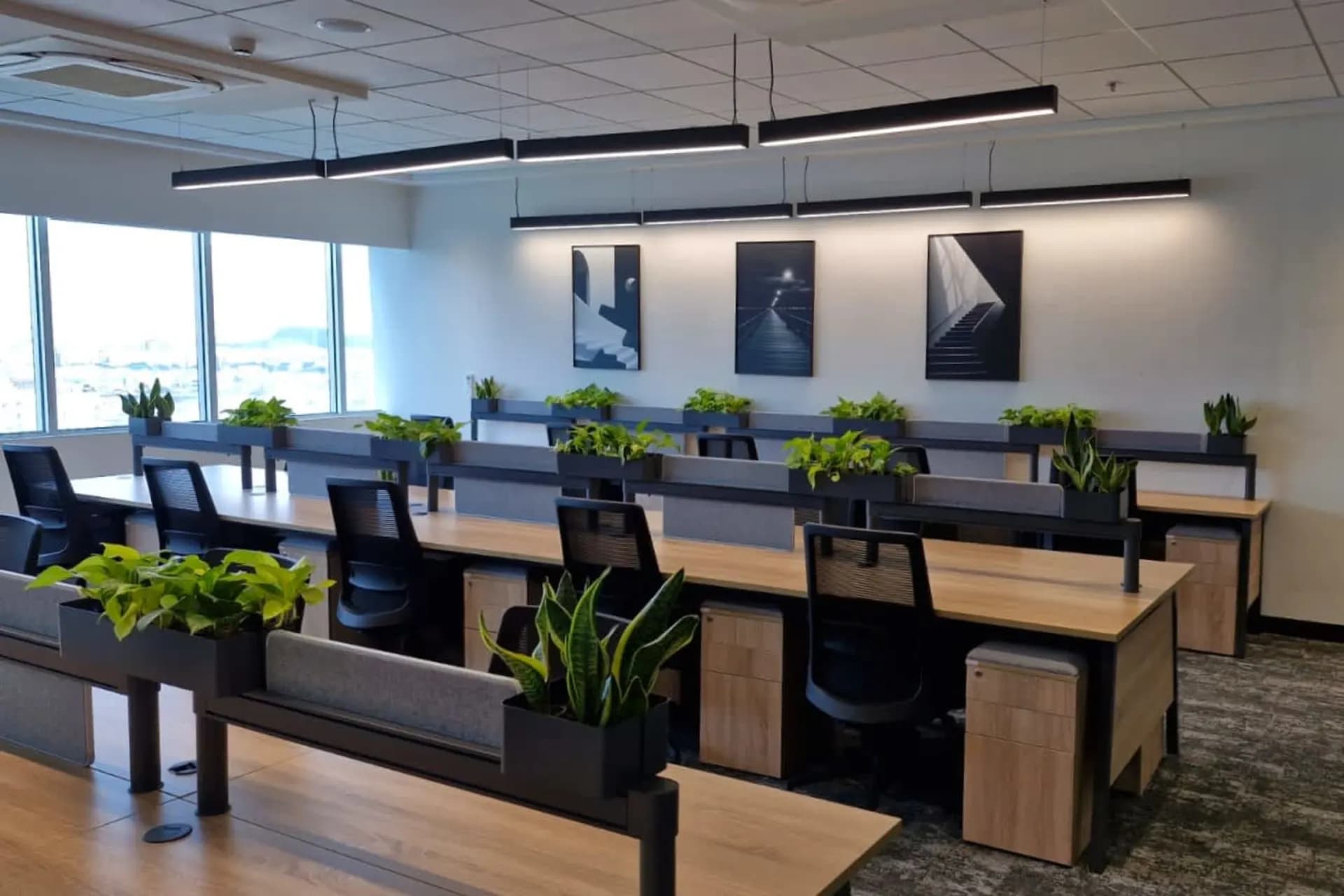
Flexible office space covers a spectrum from shared coworking desks to fully managed private offices where an operator handles fit-out, furniture, and facilities, and you simply pay a monthly seat fee. The defining feature is the short commitment period, typically ranging from a few months to 2-3 years, with minimal upfront capital investment.
Pune has seen strong growth in flexible office supply across Baner, Kharadi, and Viman Nagar, driven by demand from startups, small teams of larger companies, and businesses testing a new market before committing further.
What Counts as a Long-Term Lease?
A long-term lease typically runs 5 to 9 years, often on a bare shell or warm shell basis, requiring the tenant to invest in their own fit-out. In exchange, the tenant gets full control over the space, branding, layout, and often better per-square-foot rates once the lease term and scale justify it.
Long-term leases dominate in Pune's established IT corridors Hinjewadi, Kharadi, and Magarpatta where larger occupiers, including GCCs and established IT companies, prioritize stability and customization over flexibility.
Cost Comparison
On a pure per-seat basis, flexible office space usually costs more per month than an equivalent seat in a long-term leased office, once fit-out costs are amortized over a multi-year term. This is the trade-off: you're paying a premium for flexibility and zero upfront capital investment.
For a startup with fewer than 30-40 seats, this premium is often worth it the capital that would go into fit-out, furniture, and deposits can instead go into hiring or product development. Once a team crosses roughly 50-75 seats and has visibility on stable headcount for the next 2-3 years, the economics typically shift in favor of a long-term lease, since fit-out costs get spread over a longer period and per-seat rent drops meaningfully.
Flexibility and Scalability
This is where flexible office space clearly wins. Most flexible operators allow you to scale seats up or down within the same building or across their network, often with just 30-60 days' notice. For a startup uncertain about headcount growth post-funding hiring sprees, seasonal team changes, or early-stage pivots this flexibility removes a significant real estate risk.
Long-term leases don't offer this. Scaling up usually means negotiating additional floor space if available, and scaling down mid-lease can mean subletting or absorbing unused space cost, which is a much harder problem in India's leasing market compared to markets with more liquid sublease norms.
Fit-Out and Branding Control
If your startup has reached a stage where office environment is part of your employer brand or client-facing experience, a long-term lease on a bare or warm shell gives you complete control layout, branding, meeting room design, and workspace culture all reflect your company rather than an operator's standard template.
Flexible office space, particularly shared coworking formats, offers limited branding control. Managed office formats within flexible space have improved this significantly, allowing more customization while retaining shorter lease commitments — a middle ground increasingly popular among growth-stage startups in Pune.
Location and Micro-Market Considerations
Flexible office operators in Pune are concentrated in Baner, Kharadi, and Viman Nagar, generally in mixed-use or newer commercial developments. Long-term lease options are broader and span more established corridors including Hinjewadi and Magarpatta, where larger Grade A supply exists specifically for bare and warm shell leasing.
If your team needs proximity to a specific talent pool or client base, this can influence which model is realistically available in your preferred micro-market.
Which Option Makes Sense for Your Startup?
Choose flexible office space if: Your headcount is under 40-50 seats, you're uncertain about growth trajectory over the next 2 years, you want zero upfront capital investment, or you're testing Pune as a new market before committing further.
Choose a long-term lease if: You have visibility on stable or growing headcount over 3+ years, you want full control over fit-out and branding, and the per-seat cost savings at scale outweigh the flexibility premium.
Many startups in Pune follow a natural progression starting in flexible office space during early growth, then transitioning to a long-term leased office once headcount and funding stability justify the shift.
How Which Floor Helps Startups Decide
Choosing between flexible and long-term office space isn't just a cost decision it depends on your growth stage, hiring plans, and how long you need certainty on location. At Which Floor, we work with startups and growing businesses in Pune on a zero-brokerage basis, mapping out both options against your actual headcount projections rather than pushing one format by default.
Frequently Asked Questions
Common queries related to commercial real estate & office leasing.