How Much Office Space Does Your Business Need? A Pune Market Guide
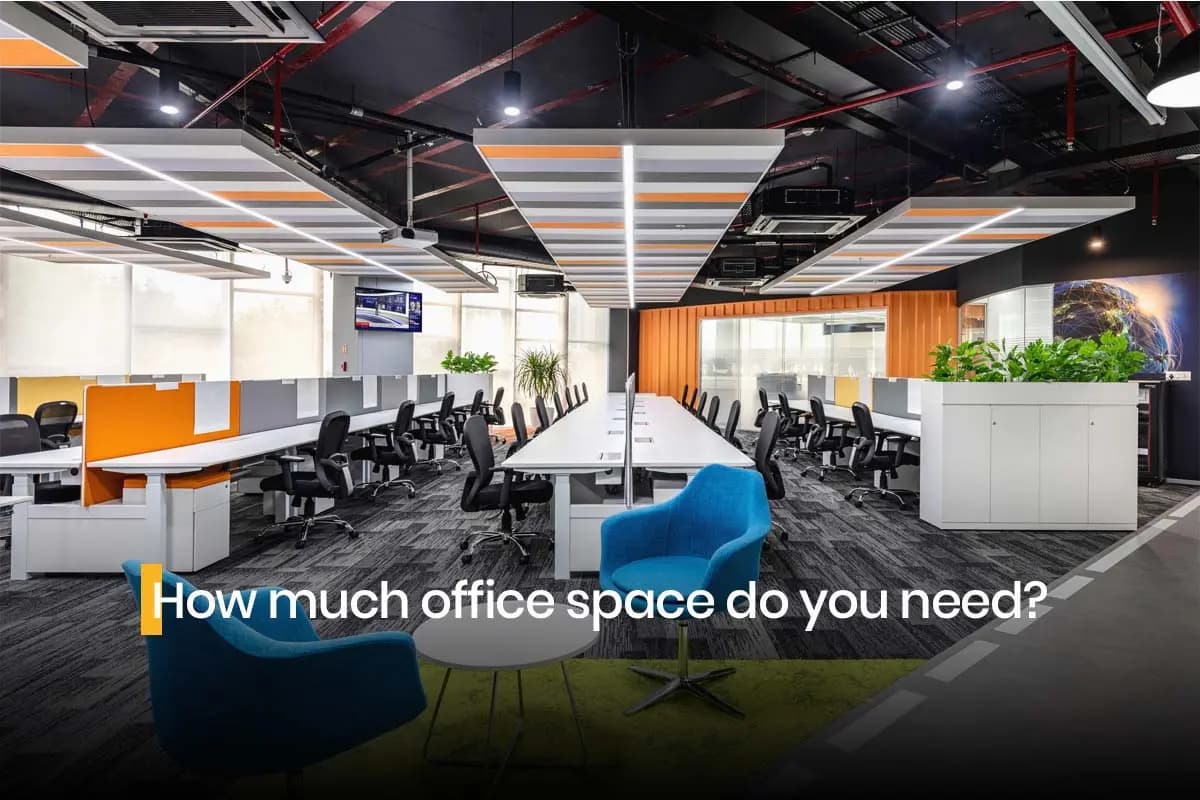
Finding the perfect office space in Pune is a big step, and you want to get it right. Too little space can make your team feel cramped, while too much space can drain your budget. This guide helps you determine exactly how much office space your business needs, using a modern, practical approach suited to today’s work environment.
Why the Old Rules Don’t Work Anymore
For years, companies planned for 100–150 sq. ft. per employee. That made sense when everyone had a fixed desk, desktop computers, and private cabins.
Today’s hybrid work models, hot-desking, and flexible schedules have changed everything. Modern offices are no longer just rows of desks — they include focus zones, collaboration spaces, and breakout areas. Space planning must reflect how people actually work.
Step 1: Think About How You Work
Before calculating square footage, define your work culture and policies:
- Hybrid policy: If a 50-person team comes in only three days a week, you may need desks for just 60–80% of employees.
- Work style: Collaborative teams need more meeting rooms; focused teams need private cabins and phone booths.
- Industry: Creative agencies and software teams have very different space requirements.
Step 2: Use the Modern Space Calculation Method
1. Workstations and Desk Space
- Open-plan desk: 50–70 sq. ft. per person
- Private cabin: 100–150 sq. ft.
Example: A 30-person team with a hybrid model may need only 22 desks. 22 × 60 sq. ft. = 1,320 sq. ft.
2. Meeting and Collaboration Rooms
- Small huddle room (4 people): 80–100 sq. ft.
- Medium conference room (6–8 people): 150–200 sq. ft.
- Large boardroom (10+ people): 250+ sq. ft.
- Phone booths: ~25 sq. ft. each
Example: 2 huddle rooms (180 sq. ft.) + 1 conference room (180 sq. ft.) + 2 phone booths (50 sq. ft.) = 410 sq. ft.
3. Common Areas and Amenities
- Reception/Lobby: 100–200 sq. ft.
- Pantry/Kitchenette: 100–150 sq. ft.
- Breakout/Lounge: 15–25 sq. ft. per employee
- Storage, print areas, server room (if required)
Example: Reception (150) + Pantry (120) + Breakout (600) = 870 sq. ft.
4. Circulation Space
Hallways, aisles, and internal movement areas typically account for 20–30% of usable space and must be included.
Step 3: Final Space Calculation
- Workstations: 1,320 sq. ft.
- Collaboration spaces: 410 sq. ft.
- Common areas: 870 sq. ft.
Usable area subtotal: 2,600 sq. ft.
Add 25% circulation space: 2,600 × 1.25 = 3,250 sq. ft.
In Pune, landlords usually quote rent on Super Area, which includes common building spaces. Add another 15–25% load factor.
Estimated super area required: 3,900–4,000 sq. ft.
Pune Market Considerations & Cost Implications
- Prime IT hubs (Kharadi, Hinjawadi, Viman Nagar): ₹65–₹100+ per sq. ft.
- Emerging corridors (Wagholi, Baner, Talawade): ₹45–₹70 per sq. ft.
- PCMC areas (Nigdi, Akurdi, Chinchwad): ₹40–₹60 per sq. ft.
A well-planned 3,500 sq. ft. office can outperform a poorly designed 4,500 sq. ft. space — and save lakhs annually.
Final Checklist Before You Lease
- Confirm current and projected headcount
- Define your hybrid attendance policy
- Sketch a rough layout
- Identify must-have amenities
- Understand the load factor
- Consult a commercial real estate expert or interior designer
Conclusion
Choosing the right office size is a strategic decision, not just a math exercise. By aligning your space with your work style, culture, and budget, you can create an office in Pune that supports productivity, growth, and long-term cost efficiency.