How to Evaluate ROI in Commercial Properties in Pune
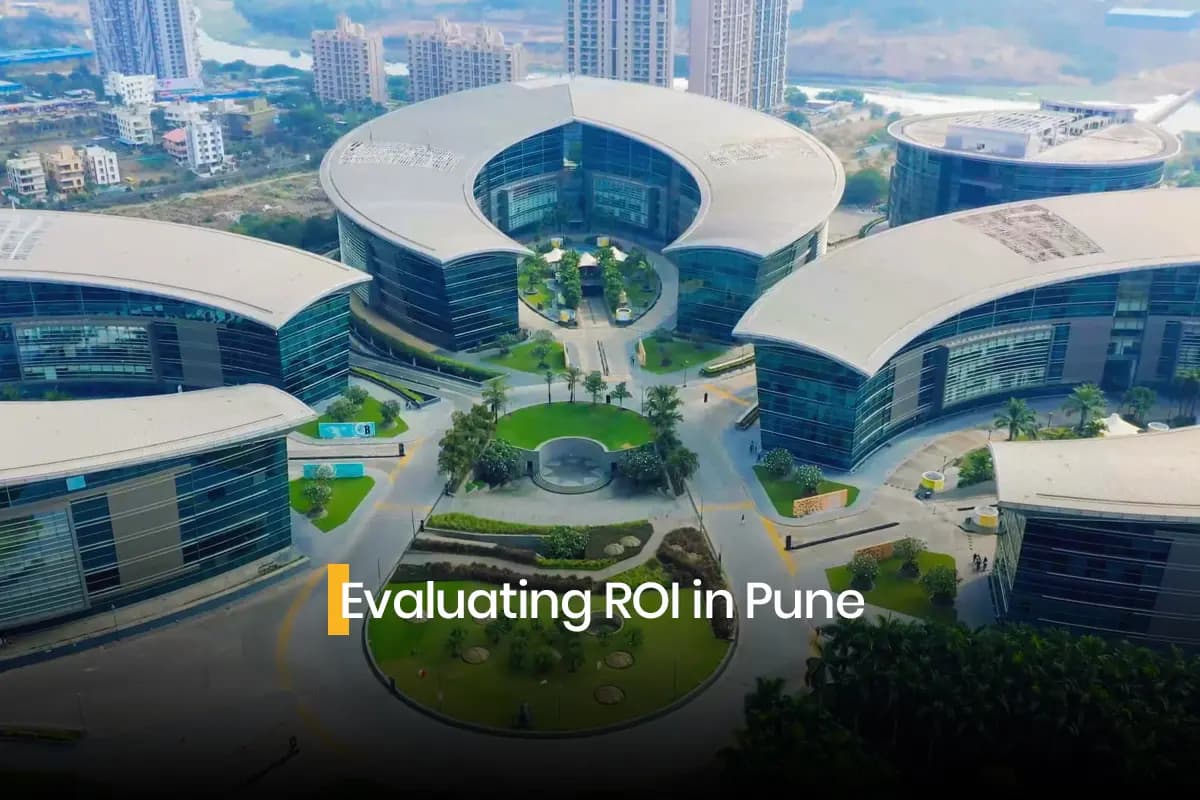
Pune’s commercial real estate market — from Hinjawadi and Kharadi to Hadapsar and Chakan — offers strong investment potential. But the real question is: what will you actually earn?
Unlike residential property, commercial ROI is driven by income and long-term cash flows. Evaluating it correctly requires understanding the right metrics.
1. Capitalization Rate (Cap Rate)
Cap Rate measures return based purely on operating income, independent of financing.
Where:
Typical Pune Operating Expenses:
- Property taxes
- Insurance
- Maintenance & society charges
- Property management (4–6%)
- Repairs reserve
Market Insight: In Pune, 8–10% cap rates are common in certain Grade A/B commercial assets, depending on location and tenant quality.
2. Gross Rental Yield
A fast screening tool before diving deeper.
Total Property Cost includes purchase price, stamp duty, registration, brokerage, and initial renovations.
Pune Benchmark: 7%+ gross yield is typically the minimum threshold for deeper analysis.
3. Cash-on-Cash Return (CoC)
Critical when using leverage (loans).
Pre-tax cash flow = NOI − annual loan payments.
Total cash invested = down payment + closing costs + renovations.
This shows your real return on the actual capital deployed.
4. NPV and IRR (Lifecycle Metrics)
Net Present Value (NPV): Discounts all future cash flows back to today’s value.
Internal Rate of Return (IRR): The annualized return of the entire investment lifecycle.
These models factor in:
- Rental growth
- Vacancy periods
- Future CapEx
- Exit price
Use Excel or financial software to simulate conservative, base, and optimistic scenarios.
Pune-Specific ROI Drivers
- Micro-Market Dynamics: Kharadi and Hinjawadi offer stable premium tenants; emerging Wagholi or Talawade may offer higher appreciation but greater risk.
- Infrastructure Impact: Metro lines and Ring Road projects materially influence rents and values — verify actual progress.
- Tenant Covenant: Long-term leases with MNCs improve stability and financing ease.
- Building Age & CapEx: Older assets may require major modernization budgets.
Practical Pre-Investment Checklist
- Calculate gross yield and cap rate.
- Model cash-on-cash return if leveraged.
- Run NPV and IRR under multiple scenarios.
- Study vacancy rates in the micro-market.
- Verify infrastructure timelines.
- Audit structural and electrical systems.
- Include all transaction costs (stamp duty, GST, brokerage, legal).
Common Mistakes to Avoid
- Chasing high cap rates without understanding risk.
- Over-relying on proposed infrastructure.
- Ignoring tenant quality and lease duration.
- Underestimating management and maintenance costs.
Final Thought
ROI isn’t a single number — it’s a structured evaluation combining math and local insight.
Use Cap Rate for income strength, Cash-on-Cash for leverage performance, and IRR/NPV for lifecycle returns. Layer that with Pune’s micro-market dynamics and infrastructure reality to make disciplined investment decisions.
Disclaimer: Educational content only. Not financial, legal, or tax advice. Always conduct independent due diligence and consult qualified professionals before investing.