Is Pune Ready for REITs? What Investors Should Know
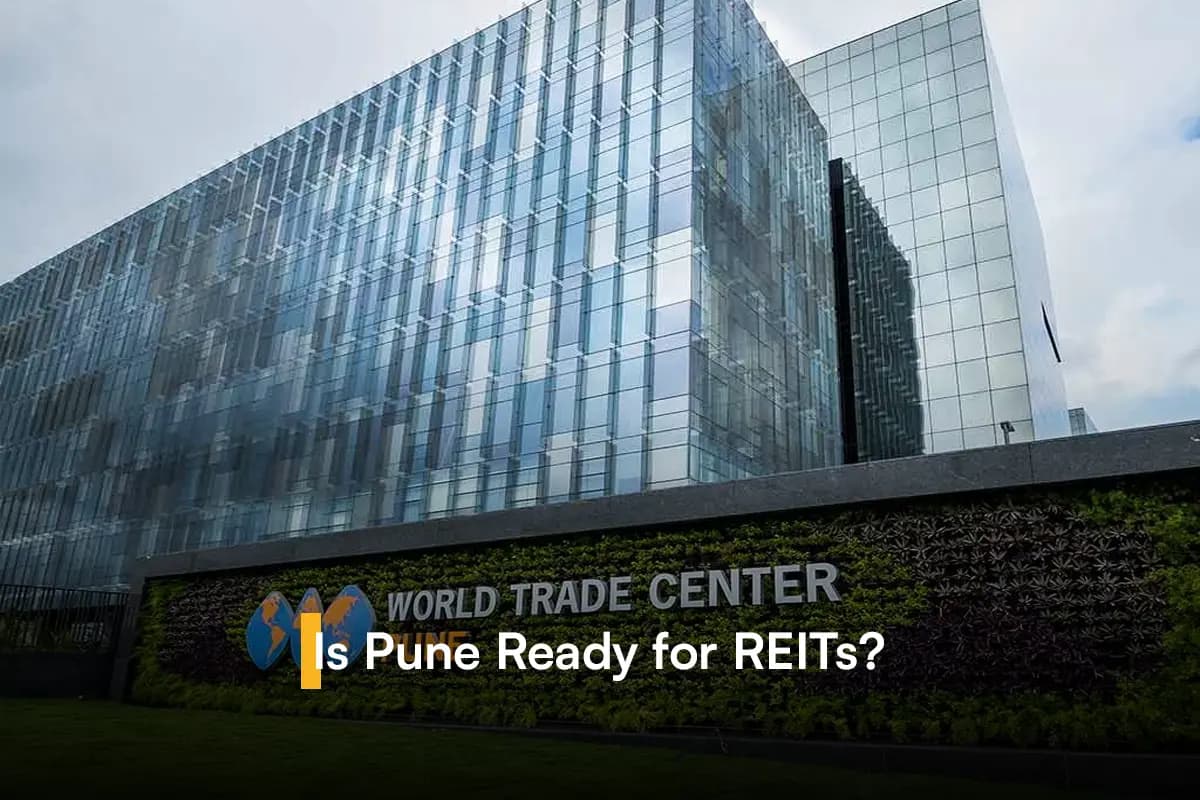
Pune’s commercial real estate market has matured significantly over the past decade. With Grade-A office parks, global tenants, and strong rental performance, many investors are asking: Is Pune ready for its own REIT?
From a market fundamentals perspective, the answer is yes. However, a standalone Pune-only REIT may not be imminent. Instead, Pune’s premium assets are more likely to be included in diversified pan-India REIT portfolios.
The Case for Pune’s REIT Readiness
1. A Diverse and Resilient Economy
Pune is a major hub for Global Capability Centers (GCCs), IT/ITeS firms, automotive giants, and manufacturing companies. Micro-markets like Hinjawadi and Kharadi host multinational tenants that generate stable, long-term rental income — a core requirement for REIT structures.
The Chakan–Talegaon belt further strengthens demand for industrial and logistics real estate, adding sectoral diversification.
2. Presence of Grade-A Assets
Pune’s commercial supply is dominated by institutional-grade developments from reputed developers. These assets typically feature:
- High occupancy rates (often 90%+)
- Long-term leases with blue-chip tenants
- International building standards
- ESG-compliant infrastructure
These characteristics align well with REIT investment criteria.
3. Strong Market Performance
Pune’s prime office markets have demonstrated steady rental growth and resilient absorption levels. Rental escalations built into lease agreements are expected to drive moderate appreciation in 2025 and beyond.
Compared to Mumbai, Pune offers lower occupancy costs, making it attractive for corporate expansion and sustained tenant demand.
Why a Standalone Pune REIT May Take Time
1. Portfolio Scale Requirements
Launching a REIT requires aggregation of large, income-generating assets worth thousands of crores. Pune’s Grade-A properties are currently fragmented among multiple institutional owners, making consolidation into a city-specific REIT challenging.
2. Developer Strategy Shift
Traditionally, many developers followed a “develop and sell” model for quicker capital recycling. The REIT structure requires a “develop and hold” mindset focused on long-term rental yield — a strategy that is still evolving in parts of the Indian market.
What Investors Should Consider
Even if a Pune-only REIT does not launch immediately, investors can still gain exposure to the city’s growth story through:
- Investing in existing pan-India REITs that may acquire Pune assets
- Tracking major portfolio acquisitions in Pune’s prime micro-markets
- Investing in listed developers with significant commercial hold-and-lease portfolios in the city
As institutional participation increases and more assets mature into stabilized, income-generating properties, Pune’s share within national REIT portfolios is likely to expand.
The Bottom Line
Pune has the economic depth, tenant diversity, and asset quality to support REIT-grade investments.
While a dedicated Pune REIT may not emerge immediately, the city is already playing an important role in India’s broader institutional commercial real estate landscape.
For long-term investors, Pune remains a structurally strong market — and REIT participation is likely to deepen as asset aggregation and market maturity continue.