Office Space for 200 Employees: Size, Layout and Budget
How Much Office Space Do 200 Employees Need?
For a team of 200 employees, an office of approximately 14,000–24,000 sq. ft. can be a useful starting point for planning a conventional corporate workspace. Compact layouts may require less, while offices with extensive cabins, collaboration areas and amenities may need more.
The final requirement depends on the number of workstations, office attendance, layout and usable carpet area.
As an indicative guide:
- 10,000–14,000 sq. ft.: Compact, space-efficient office layout.
- 14,000–20,000 sq. ft.: Balanced corporate workspace with meeting rooms and cabins.
- 20,000–24,000+ sq. ft.: More spacious setup with additional collaboration and employee amenities.
These are preliminary estimates, not fixed standards. A hybrid workplace with shared desks may require less space than an office where all 200 employees attend daily.
What Should the Office Layout Include?
A well-planned office for 200 employees should accommodate daily operations without making the workplace feel crowded.
Depending on your business, the layout may include:
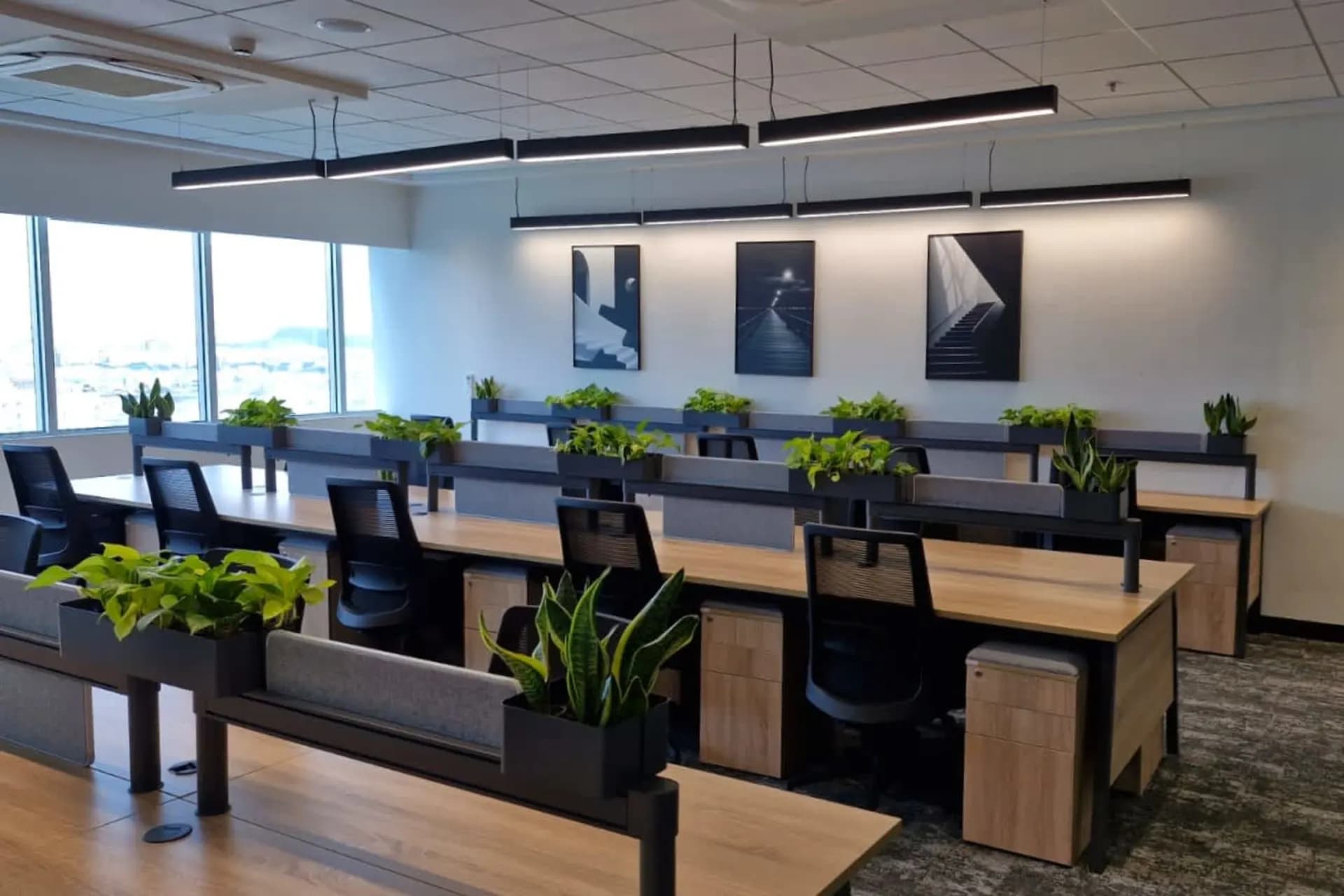
- Workstations for employees
- Meeting rooms and conference facilities
- Leadership and manager cabins
- Reception and visitor waiting area
- Pantry and breakout space
- IT or server room
- Storage and support areas
- Circulation space and emergency access routes
Before finalizing a property, prepare a seating plan based on your actual headcount and workplace requirements. This helps you determine whether the available floor plate can accommodate your team comfortably.
Carpet Area vs Chargeable Area
One of the most important factors when selecting a commercial office is understanding the difference between carpet area and chargeable area.
Carpet area represents the usable area within the premises, while chargeable area may include a proportionate share of common areas, depending on the building and lease terms.
For example, two offices advertised at 20,000 sq. ft. may offer different usable spaces and layout efficiencies.
When evaluating [], compare the actual carpet area, floor plan, rental calculation and maintenance charges rather than relying only on the advertised size.
How Much Should You Budget?
Your office budget depends on the location, building grade, rental rate, lease terms and whether the premises are furnished, managed or unfurnished.
Calculate the complete occupancy cost, including:
- Monthly rent and security deposit
- Common Area Maintenance (CAM) charges
- Interior design and fit-out expenses
- Furniture and workstations
- Internet and IT infrastructure
- Electricity and backup power
- Parking and other building charges
- Housekeeping and maintenance
For a conventional lease, upfront fit-out costs can significantly affect the initial budget. A managed office may reduce setup responsibilities, although the commercial terms and included services need to be evaluated carefully.
Managed Office vs Conventional Office
For a 200-person team, the choice between a managed workspace and a conventional office depends on how quickly the business needs to move in and how much customization it requires.
A managed office may be suitable for businesses seeking a ready-to-use environment with selected services and less fit-out coordination.
A conventional office lease can offer greater control over branding, layout and infrastructure, but often requires more planning and upfront investment.
Compare both options based on total cost, flexibility, security requirements and expected lease tenure.
Choose a Location That Supports Growth
Office location affects employee commute, recruitment, client access and long-term expansion.
In Pune, businesses may evaluate commercial areas such as Baner, Balewadi, Kharadi, Hinjewadi and Viman Nagar based on workforce requirements and connectivity.
Companies exploring expansion in Madhya Pradesh can also consider when assessing their workplace strategy.
Before signing a lease, check whether the building can support additional employees and whether neighbouring office space may be available if your business grows.
When evaluating commercial office space in Pune, compare the actual carpet area, floor plan, rental calculation and maintenance charges rather than relying only on the advertised size.
Businesses looking for office space in Baner and Balewadi can compare locations based on employee accessibility, office requirements and future expansion plans.
Companies exploring expansion in Madhya Pradesh can also consider commercial office locations in Indore when assessing their workplace strategy.
At WhichFloor.in, businesses can explore commercial office options based on employee strength, location, office size and operational requirements.
Frequently Asked Questions
Common queries related to commercial real estate & office leasing.