Pre-Leased Commercial Properties in Pune: ROI Breakdown & Risk Analysis
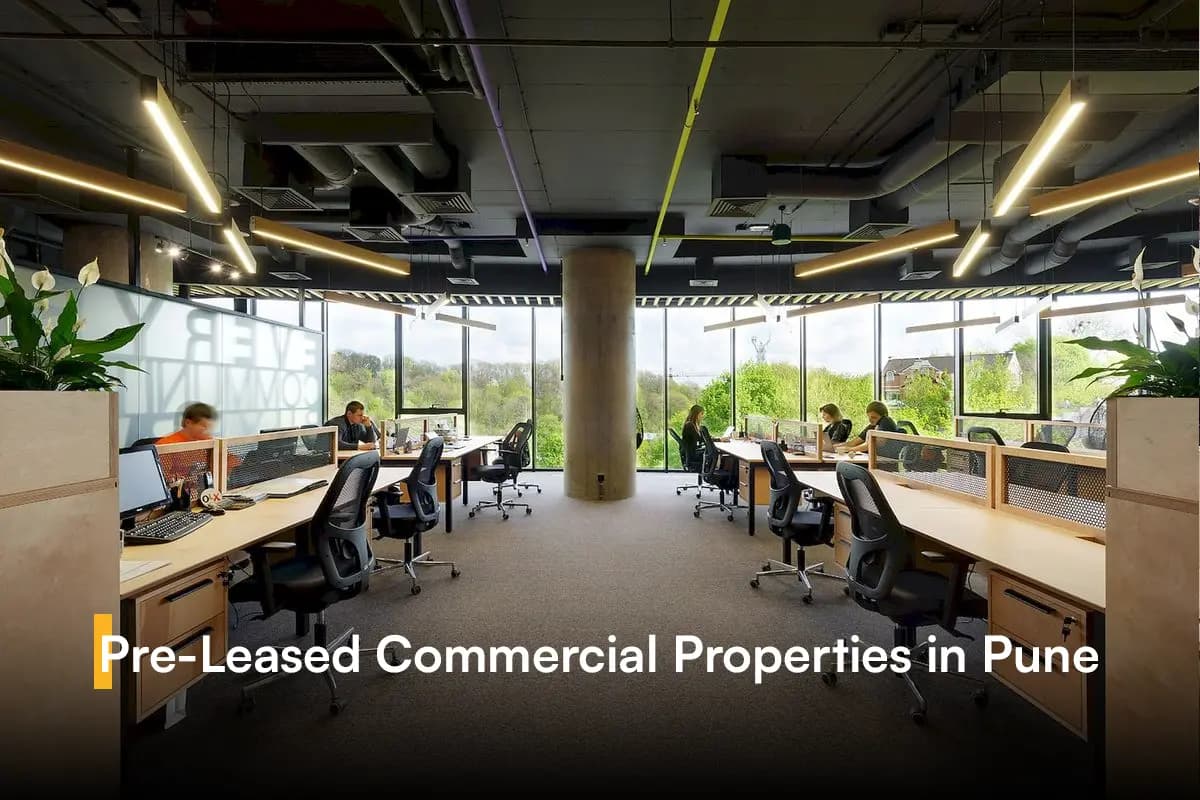
Pre-leased commercial properties have become increasingly attractive to institutional investors, family offices, and private capital in Pune. Unlike speculative acquisitions, these assets already generate rental income, reducing vacancy risk and improving early-stage returns.
This guide breaks down ROI potential, analyzes associated risks, and provides evaluation frameworks for investors in 2026 and beyond.
What Are Pre-Leased Commercial Properties?
A pre-leased property is a commercial asset that already has tenants under long-term lease agreements at the time of sale. These leases typically include structured rent escalations and defined tenure, creating predictable income streams.
Common pre-leased asset types in Pune include:
- Grade A office buildings
- Corporate campuses
- Retail assets with anchor tenants
- Single-tenant investment properties
- Multi-tenant office parks
Why Investors Prefer Pre-Leased Assets
- Immediate rental income
- Lower vacancy risk
- Simplified valuation through known NOI
- Strong occupier demand in Pune (GCCs, IT, BFSI)
ROI Breakdown: Key Metrics
Net Operating Income (NOI)
NOI excludes financing costs and reflects pure operating performance.
Capitalization Rate (Cap Rate)
Typical Pune cap rate ranges (2026):
- Grade A – Prime: 7.0% – 8.0%
- Secondary Office: 8.0% – 9.0%
- Retail: 7.5% – 8.5%
Internal Rate of Return (IRR)
IRR measures total return over the holding period, factoring rental growth and exit value.
Example ROI Scenario
Pre-leased office in Hinjewadi:
- NOI: ₹1.2 crore annually
- Purchase Price: ₹15 crore
Result: ~8% cap rate.
Assuming 5–10% rental escalation every 3 years and a 7-year hold, projected IRR could range between 10%–12% depending on exit cap rate and market conditions.
Escalation Impact on Returns
Structured escalations steadily increase NOI, improving valuation over time.
Market Conditions Supporting Pre-Leased Yields
- Strong GCC and tech occupier demand
- Balanced vacancy levels
- Institutional capital inflow
- Relative affordability vs Mumbai/Bengaluru
Key Risks to Evaluate
Tenant Credit Risk
Income stability depends heavily on tenant financial health and lease tenure.
Lease Structure Risk
- Near-term expiries
- Weak escalation clauses
- Below-market rental lock-ins
Concentration Risk
Single-tenant assets carry higher vacancy risk upon expiry.
Liquidity Risk
Secondary assets may require longer exit timelines during economic slowdowns.
Risk Mitigation Framework
- Prioritize 5+ year remaining lease tenure
- Assess tenant financial strength
- Focus on prime submarkets (Hinjewadi, Kharadi, Baner)
- Diversify tenant base where possible
- Conduct full lease and compliance due diligence
Pre-Leased vs Value-Add Strategy
| Feature | Pre-Leased | Value-Add |
|---|---|---|
| Income Start | Immediate | Delayed |
| Vacancy Risk | Low | Higher |
| Return Predictability | High | Moderate |
| Upside Potential | Moderate | High |
2026 Outlook
- Continued institutional capital allocation
- Stable rental environment
- Possible cap rate compression in prime clusters
- Growing GCC footprint
Conclusion
Pre-leased commercial properties in Pune offer a strong balance of cash flow stability and moderate appreciation potential. While risks exist, disciplined underwriting — focused on tenant strength, lease structure, and submarket fundamentals — allows investors to achieve stable, risk-adjusted returns in 2026 and beyond.
Disclaimer: Informational purposes only. Not financial or investment advice. Conduct independent due diligence before investing.